
Why Your Ozempic 'Food Noise' Came Back (And How to Fix It)
Imagine it is 10:15 PM. You are standing in front of the open refrigerator, staring at the shelves. Suddenly, the internal whispers start: Pizza. Pasta. Ice cream. If you are trying to lose weight, that relentless mental chatter is known as “food noise.” For the first few months on a GLP-1 medication like Ozempic or Mounjaro, it feels like a total miracle. The volume knob on those cravings is turned completely down.
But then, around month four, five, or six—or perhaps after a particularly stressful week—the whispers return. You start to panic: Is my body resisting the medicine? Is this the end of my weight loss journey?
As a pharmacist navigating this exact journey myself, I am here to tell you something most clinicians won’t: This happened to me too. The magic isn’t permanently wearing off, and you haven’t failed. Your body is just incredibly smart. Let’s dive into the clinical biology of why food noise creeps back and the exact physiological roadmap you can use to quiet it again.
The Science: Why the Noise Returns
Most people assume GLP-1 medications are simple hunger blockers. In reality, they act more like a high-tech volume knob for your brain.
1. Chemical Fullness vs. Your Brain’s Reward Center
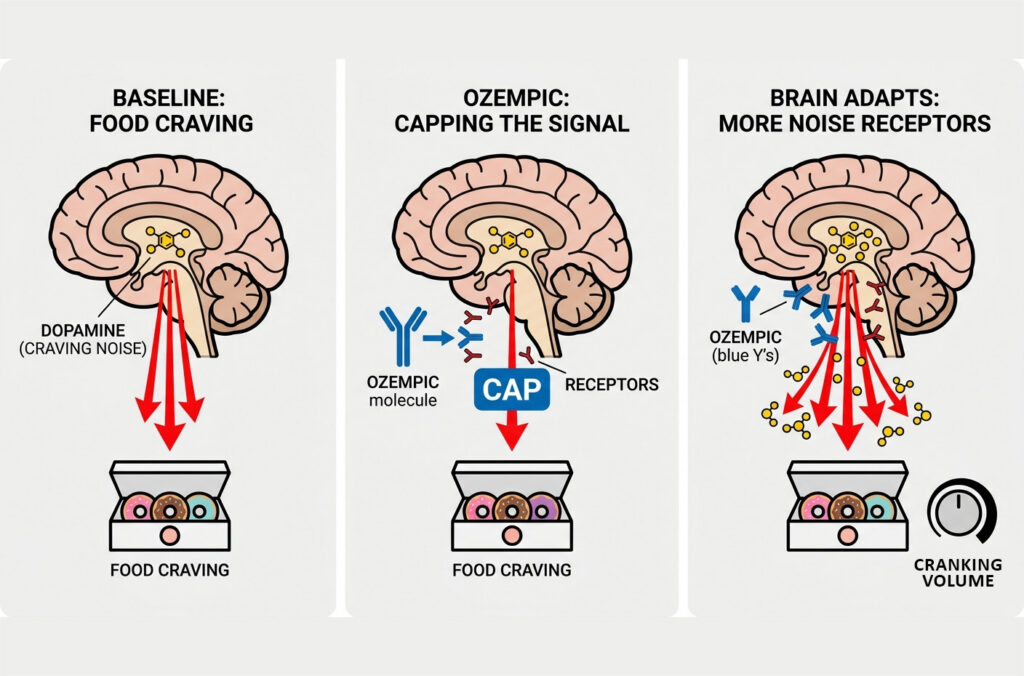
Medications like Ozempic bind to receptors in your brain’s reward center, actively turning down dopamine—the chemical responsible for that urgent “I need it now!” feeling when you see a box of donuts. By quieting this signal, the medication creates chemical fullness, telling your brain you have plenty of energy stored even if you haven’t eaten in hours.
However, your brain is a master of adaptation. It likes its old noise levels. Over time, it can grow more receptors or become desensitized to the medication’s signal, attempting to crank the radio volume back up.
2. Physical Fullness and the "Henday Traffic Jam"
The second way these medications work is physical. Think of your stomach on a GLP-1 like a massive traffic rush-hour backup on the Anthony Henday at 5:00 PM. Everything is backed up, nothing is moving, and the cars (food) can’t leave the parking lot. This is delayed gastric emptying.
Eventually, your body’s internal engineers figure out a way to clear the wreck and speed the traffic back up. When your stomach begins emptying at a normal speed again, that stuffed, physical feeling vanishes, leaving your brain screaming for more food.

The Fix: How to Fight Back
When chemical fullness dips, you cannot rely purely on 100% willpower to fight it. If you try, you will likely end up binging by day six or seven. Instead, you must switch your strategy to rely heavily on physical fullness.
Pillar 1: The Protein-Fiber Secret
Your brain will keep the food noise at 100% until you satisfy what is known as the Protein Leverage Hypothesis. If you eat 800 calories of Oreos, the noise stays loud because there is no protein. However, consuming 25 to 30 grams of protein (like chicken or steak) triggers the release of Peptide YY—the specific hormone that signals long-term fullness after a meal.
Pair that protein with dietary fiber (like chia seeds, beans, or berries). Fiber forms a physical gel that pushes against your stomach walls. Your brain can ignore a chemical signal, but it cannot ignore a physical stretch.
The Rule: Next time the noise gets loud, don’t reach for a snack. Reach for 25–30 grams of protein plus fiber, and watch how quickly the noise shuts up.

Pillar 2: Overcoming the "GLP Wall" & The 6th-Day Slump
If the noise is returning aggressively every week, you might be hitting one of two medication traps:
- The Premature Plateau: You are staying on a low dose because you are losing weight, but your brain is white-knuckling through cravings. This is a sign you may need to speak with your doctor about stepping up your dose.
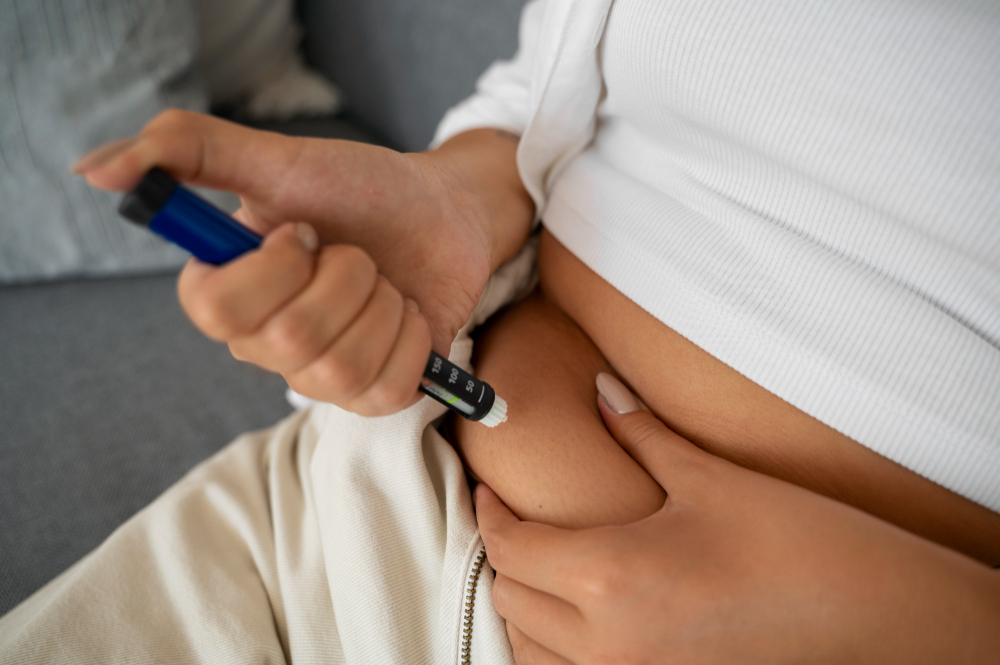
- The Sixth-Day Slump: Because of the medication’s half-life, your blood levels are at their lowest six days after your shot. If your weekends are your biggest lifestyle challenge, consider adjusting your injection day to Thursday morning. This ensures the drug peaks in your system right when temptation hits hardest on Friday and Saturday.
Pillar 3: Mindful Eating Habits
Treat the days when your medication dips as a training ground for life after weight loss.
- The Water-First Rule: Dehydration frequently disguises itself as food noise when drug levels are low. Drink a crisp glass of water or electrolytes before entertaining any craving.
- The Three-Bite Rule: Do not entirely deny your cravings, or they will turn into obsessions. Allow yourself two or three spoonfuls of a treat to satisfy the mental noise, and then physically walk away.
- Eat a Mini-Meal: If you are genuinely hungry, skip the empty calories of potato chips. Eat a mini-meal with metabolic utility—like Greek yogurt with nuts or a turkey wrap—to properly quiet the noise.

Moving Forward Legally and Safely
Experiencing a return of food noise isn’t a sign of failure; it is a physiological signal to adjust your strategy. Focus on your protein-fiber ratios, lean into the mindful habits you are building, and evaluate your titration schedule.
If you are a patient navigating this weight loss journey and feel the magic wearing off, we can help you build the right roadmap.
Want more science-backed health insights? Subscribe to our blog, and visit us at iCare Pharmacy for professional, personalized guidance on your healthcare journey.
Disclaimer: The information provided in this article is for educational purposes only and should not replace professional medical advice. Always consult your physician or pharmacist before altering your medication schedule or dosage.