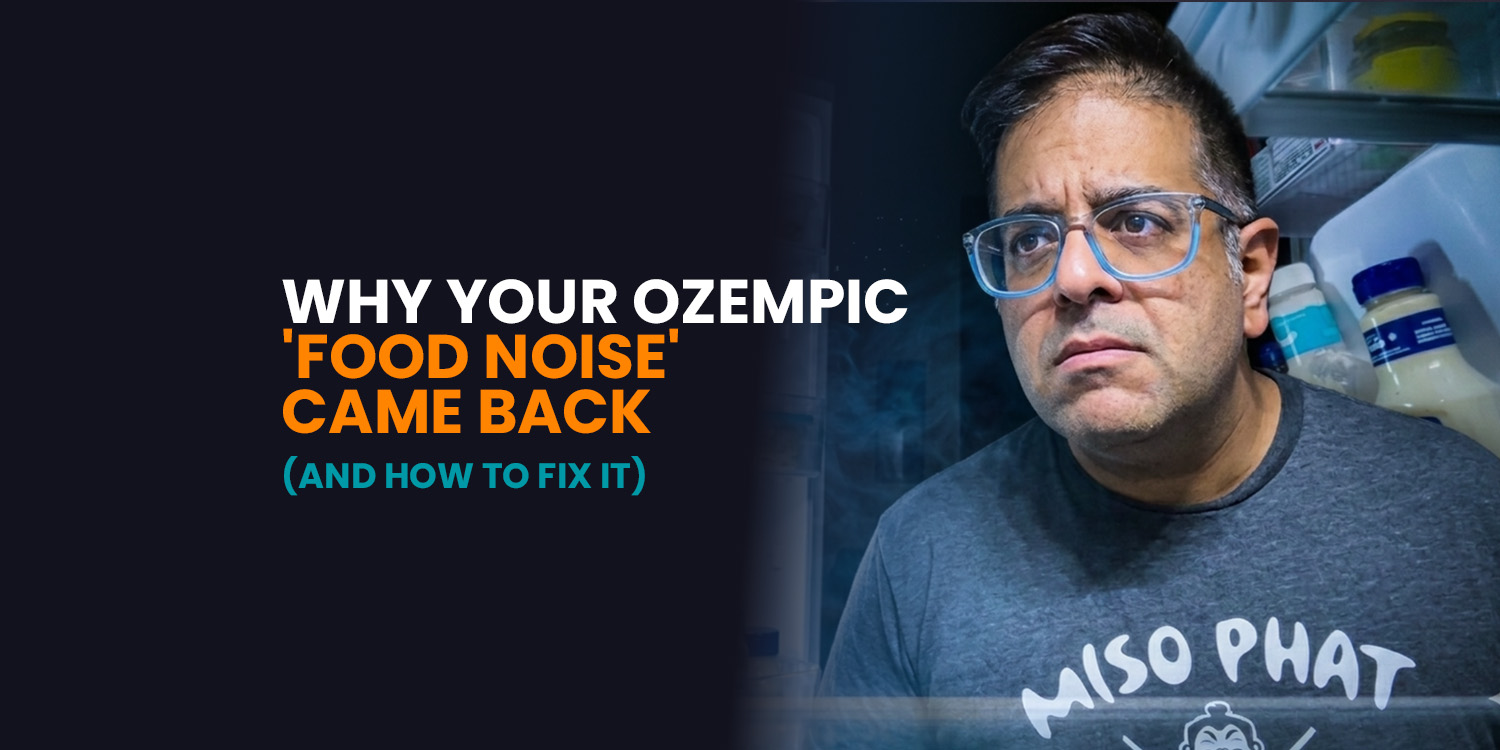

The Constant Hum in Your Head
Do you ever find yourself planning dinner while you’re still eating lunch? Do thoughts of food dominate your mind, even when you’re not physically hungry? If so, you’re experiencing what experts call “Food Noise.” This isn’t a lack of willpower; it’s a very real, often exhausting, biological and psychological phenomenon that can feel like a radio in your brain stuck on full volume. As Pharmacy Dad, I’m here to explain what Food Noise is, why it’s so pervasive, and how you can finally turn down the volume
What Exactly is "Food Noise"? It's More Than Just Hunger.
“Food Noise” refers to the intrusive, recurring, and often distressing thoughts about food, eating, and cravings that persist even when your body’s energy needs are met. It’s the mental chatter that makes you:
- Constantly evaluate your next meal or snack.
- Feel guilty about past eating choices.
- Obsess over calorie counts or macros.
- Struggle to focus on other tasks because food thoughts keep pulling your attention away.
Unlike true physiological hunger (which builds gradually and is satisfied by eating), Food Noise is often driven by a complex interplay of hormones, brain chemistry, psychological factors, and even past dietary habits.

The Science Behind the Static: Why Your Brain Won't Shut Up
Our brains are hardwired for survival, and food plays a central role in that. However, in our modern environment, this system can go haywire. Here’s what’s really going on:
- Hormonal Imbalance (Ghrelin & Leptin): Hormones like ghrelin (the hunger hormone) and leptin (the satiety hormone) play a crucial role. If these signals are imbalanced – perhaps due to poor sleep, chronic stress, or insulin resistance – your brain might constantly receive “eat” signals, even when it shouldn’t.
- Dopamine & Reward Pathways: Eating, especially palatable (sugary, fatty, salty) foods, triggers the release of dopamine in your brain’s reward centers. This creates a powerful feedback loop. If these pathways are constantly stimulated, your brain learns to seek out food for that dopamine hit, creating a “radio” that’s always on.
- The Gut-Brain Axis: Your gut microbiome communicates directly with your brain. An imbalanced gut can influence neurotransmitter production and inflammatory responses, potentially amplifying food cravings and thoughts.
- Psychological Factors: Stress, anxiety, boredom, and emotional eating can all contribute to Food Noise. When food becomes a coping mechanism, the mental chatter intensifies.
- Restrictive Dieting: Ironically, strict dieting can make Food Noise worse. When you severely restrict certain foods or entire food groups, your brain perceives this as a threat, triggering a primal drive to obsess over those “forbidden” foods. Studies have shown that restrictive eating can amplify cravings and preoccupation with food.

Turning Down the Volume: Practical Tips to Silence Food Noise
While emerging medications like GLP-1 agonists are showing promise in silencing Food Noise by acting on gut hormones and brain pathways, there are several practical, evidence-based strategies you can implement right now.
- Prioritize Protein at Every Meal: Protein is the most satiating macronutrient. It helps stabilize blood sugar, reduces ghrelin levels, and signals to your brain that you are full faster than carbohydrates or fats. Aim for a palm-sized portion of lean protein (chicken, fish, eggs, legumes) at each meal to keep cravings at bay.
- Ditch Restrictive Dieting & “Good/Bad” Food Labels: When you categorize foods as “bad” or “forbidden,” you inadvertently amplify your brain’s obsession with them. This scarcity mindset can trigger intense cravings. Instead, adopt an “all foods fit” approach with an emphasis on nutrient-dense options. Allowing yourself small, mindful portions of once-forbidden foods can actually reduce their power over you and quiet the mental chatter. Research indicates that flexible eating patterns are more sustainable and reduce preoccupation with food compared to rigid dieting.
- Master the 4-7-8 Breathing Technique: When a craving hits, or Food Noise becomes overwhelming, pause and engage your parasympathetic nervous system (your “rest and digest” mode). The 4-7-8 breathing technique, popularized by Dr. Andrew Weil, is a powerful tool:
- Inhale quietly through your nose for 4 seconds.
- Hold your breath for 7 seconds.
- Exhale completely through your mouth for 8 seconds, making a “whoosh” sound.
- Repeat this cycle for 3-4 breaths. This simple exercise can calm your nervous system, lower cortisol, and create a crucial “pause” that allows intense cravings to pass.
- Optimize Your Sleep Hygiene: Lack of sleep disrupts hunger-regulating hormones, increasing ghrelin and decreasing leptin. This hormonal imbalance can significantly amplify Food Noise. Aim for 7-9 hours of quality sleep each night to help reset your hunger cues and quiet the constant mental chatter.
- Stay Hydrated: Sometimes, thirst is mistaken for hunger. Keep a water bottle handy and sip throughout the day. When a craving hits, try drinking a large glass of water first and waiting 10-15 minutes to see if the urge subsides.

Conclusion: Empowering Yourself Against Food Noise
Food Noise is a real challenge, but you are not alone, and it’s not a sign of weakness. By understanding its biological and psychological roots, and by implementing practical strategies like prioritizing protein, practicing mindful eating, utilizing breathing techniques, and optimizing sleep, you can gradually turn down the volume. Remember, it’s about making peace with your body and brain, not fighting a constant battle.
References
- American Psychological Association. (2020). Stress and eating.
- Chapman, C. D., et al. (2018). Lifestyle determinants of the drive to eat: A meta-analysis. Current Opinion in Clinical Nutrition and Metabolic Care, 21(3), 209-214.
- Nestle, M. (2020). Hunger, satiety, and the control of food intake. In: Nutrition in the Prevention and Treatment of Disease.
- Paddon-Jones, D., et al. (2015). Protein, weight management, and satiety. The American Journal of Clinical Nutrition, 101(6), 1335S-1340S.
- Svalastog, A. L., & Stenmarck, J. (2010). Dieting and food preoccupation: The mediating role of hunger. Appetite, 54(3), 579-583.
- Weil, A. (2022). The 4-7-8 Breath: Why it works and how to do it. DrWeil.com.