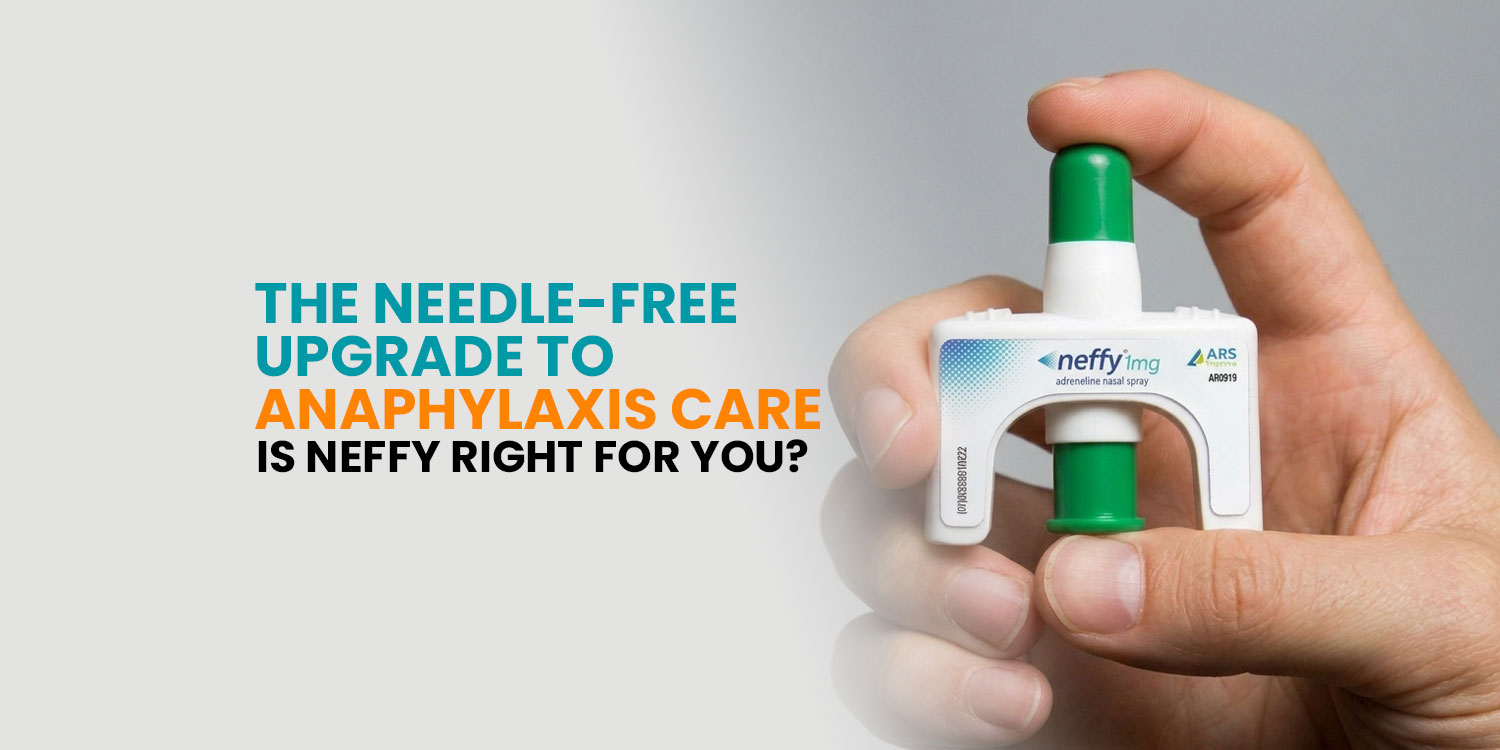
The Needle-Free Upgrade to Anaphylaxis Care: Is Neffy Right for You?
When severe allergies escalate to anaphylaxis, seconds count. Yet for millions of patients, parents, and caregivers, the sheer sight of a needle causes panic and delay. That split-second hesitation to administer an intramuscular auto-injector like EpiPen can turn a manageable emergency into a life-threatening crisis.
Health Canada’s approval of neffy® (epinephrine nasal spray) introduces the first needle-free alternative for emergency anaphylaxis management. We want to walk you through how this breakthrough compares to the traditional auto-injector, who it is for, and the vital safety steps that never change.
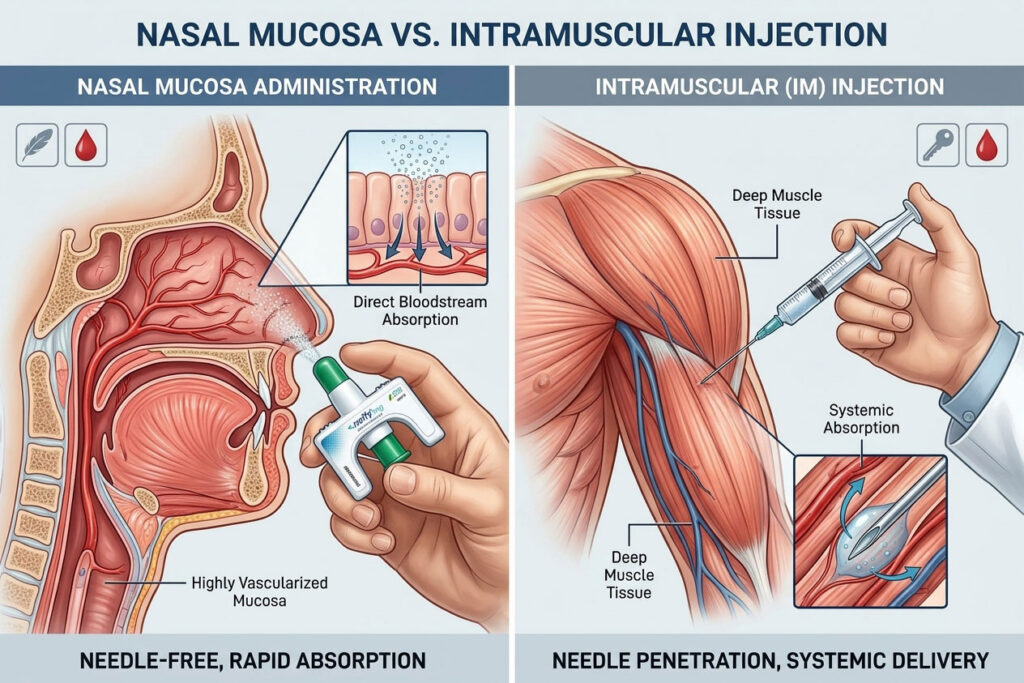
How They Work: Nasal Mucosa vs. Intramuscular Injection
Both EpiPen and neffy rely on the exact same life-saving active ingredient: epinephrine (adrenaline). During severe allergic reactions, epinephrine works rapidly to relax airway muscles, elevate dropping blood pressure, and suppress facial and throat swelling.
The fundamental difference lies entirely in the route of administration:
- EpiPen (Intramuscular Auto-Injector): Delivers a spring-loaded needle into the outer thigh (vastus lateralis muscle), depositing a liquid dose directly into muscle tissue.
- neffy (Intranasal Epinephrine Spray): Uses a needle-free, pocket-sized device that sprays a fine, highly bioavailable mist onto the nasal mucosa. The medication absorbs rapidly through the rich vascular network inside the nasal lining directly into systemic circulation.
Head-to-Head Comparison: EpiPen® vs. neffy®
Feature
EpiPen® / EpiPen Jr®
neffy® Nasal Spray
Active Drug
Epinephrine (USP)
Epinephrine (Nasal Spray)
Delivery Route
Intramuscular (Outer Thigh Injection)
Intranasal (Single Spray in One Nostril)
Weight Indication
15 kg to 30 kg (0.15 mg Jr) / 30 kg+ (0.3 mg)
Indicated for adults and pediatric patients weighing ≥ 30 kg (approx. 66 lbs)
Needle Presence
Yes (Spring-loaded needle)
Zero needles / Zero skin puncture
Form Factor
Cylindrical pen (~16 cm length)
Ultra-compact pocket unit (~5.7 cm × 4.4 cm)
Storage Temperature
15°C to 25°C (Do not refrigerate or freeze)
15°C to 25°C (Excursions permitted between 8°C and 30°C; do not freeze)
Emergency Next Step
Call 911 immediately
Call 911 immediately
3 Non-Negotiable Rules for Anaphylaxis (Regardless of Device)
Switching to a needle-free alternative removes anxiety, but it does not change the core clinical protocols of allergy emergency response:
- Always Call 911 Immediately: Epinephrine stabilizes airway constriction and cardiovascular collapse, but it does not replace hospital evaluation. Up to 20% of severe allergic reactions can trigger a secondary biphasic reaction hours later without re-exposure to the allergen.
- Always Carry a Twin-Pack (Two Doses): If symptoms do not improve or worsen within 5 minutes of your first dose, clinical guidelines recommend administering a second dose in the opposite nostril (or opposite thigh for auto-injectors).
- Never “Test-Fire” or Prime the Unit: Each neffy® device contains exactly one single-use, pre-metered dose. Testing it or pressing the plunger before an emergency will permanently empty the unit.
Who Benefits Most from a Needle-Free Option?
- Patients with Severe Needle Phobia (Trypanophobia): Eliminates psychological barriers that cause dangerous delays in dosing.
- School-Age Children & Teens (≥ 30 kg): Adolescents frequently resist carrying bulky pen devices or experience peer embarrassment. The discreet, pocket-sized nasal format dramatically improves adherence.
- Nervous Caregivers and Teachers: In stressful situations, relatives, babysitters, and school staff can administer a nasal spray with zero fear of accidental needle-stick injuries.
Pharmacy Dad Takeaway
A needle should never stand between an allergic reaction and emergency medical care. The arrival of neffy® in Canada is a monumental step forward in making life-saving epinephrine accessible, less intimidating, and easier to administer within seconds.
If you, your teen, or a loved one currently carry an auto-injector and weigh 30 kg or more, talk to our team at iCare Pharmacy. We can review your Anaphylaxis Emergency Action Plan, check insurance coverage options, and demonstrate proper device technique.
Have questions about upgrading your allergy kit?
Visit us in-store at iCare Pharmacy or connect directly with our pharmacy team at icarepharmacy.ca.
References
- Health Canada. (2024). Summary Safety Review – neffy (epinephrine nasal spray) for emergency treatment of allergic reactions (Type I) including anaphylaxis. Health Canada Drug and Health Product Submissions.
- Allergy / Asthma Information Association (AAIA) & Food Allergy Canada. (2023). Anaphylaxis in Schools & Other Settings: Canadian Guidelines for Emergency Response.
- Casale, T. B., et al. (2024). Pharmacokinetics and Pharmacodynamics of Intranasal Epinephrine (neffy) Compared to Intramuscular Epinephrine Auto-Injectors in Healthy Adults and Allergy Models. The Journal of Allergy and Clinical Immunology (JACI), 153(2), AB112.
- Canadian Pharmacists Association (CPhA). (2025). Therapeutic Highlights: Emergency Anaphylaxis Management and Modern Epinephrine Delivery Formulations. CPS Full Access